If you'd met me ten years ago, you probably would have described me as an outdoorsy woman.
I had been assisting on school hiking camps in 2015, then in 2016 I spent Winter working as a snowboarding photographer, before starting a new job sharkcage diving and guiding snorkelling tours. I guided adventures for a living, and planned surfing, hiking and camping adventures in between.
The outdoors wasn't something I was trying to become confident in, it was my life.
But it took me a surprisingly long time to realise there was a difference between being experienced outdoors and being genuinely self-led outdoors.
And that distinction has completely changed the direction of Enliven Outdoor Adventures.
I didn't grow up thinking I'd become an adventure guide
While I did spend a lot of my childhood camping, bushwalking, surfing and roadtripping, I didn't see myself as an outdoor girl. My parents both worked at my childhood school, and I loved sport (I had made the state touch football and rowing teams), so my natural career choice was to be a PE teacher.
If it wasn't for an encounter with a shark while kayaking with my now boyfriend back in 2012, I never would have had the opportunity to join a team of women training to kayak to Tasmania. And if it wasn't for that year of training, I never would have learnt anything about expeditioning, risk management, group management, meal planning, and wouldn't have discovered my love for challenge outdoors and away from sport.
I ended up still going back to university after that year and completing my double degree in Education and Health Science, but I pivoted slightly and took on the only outdoor education topics my university was offering.
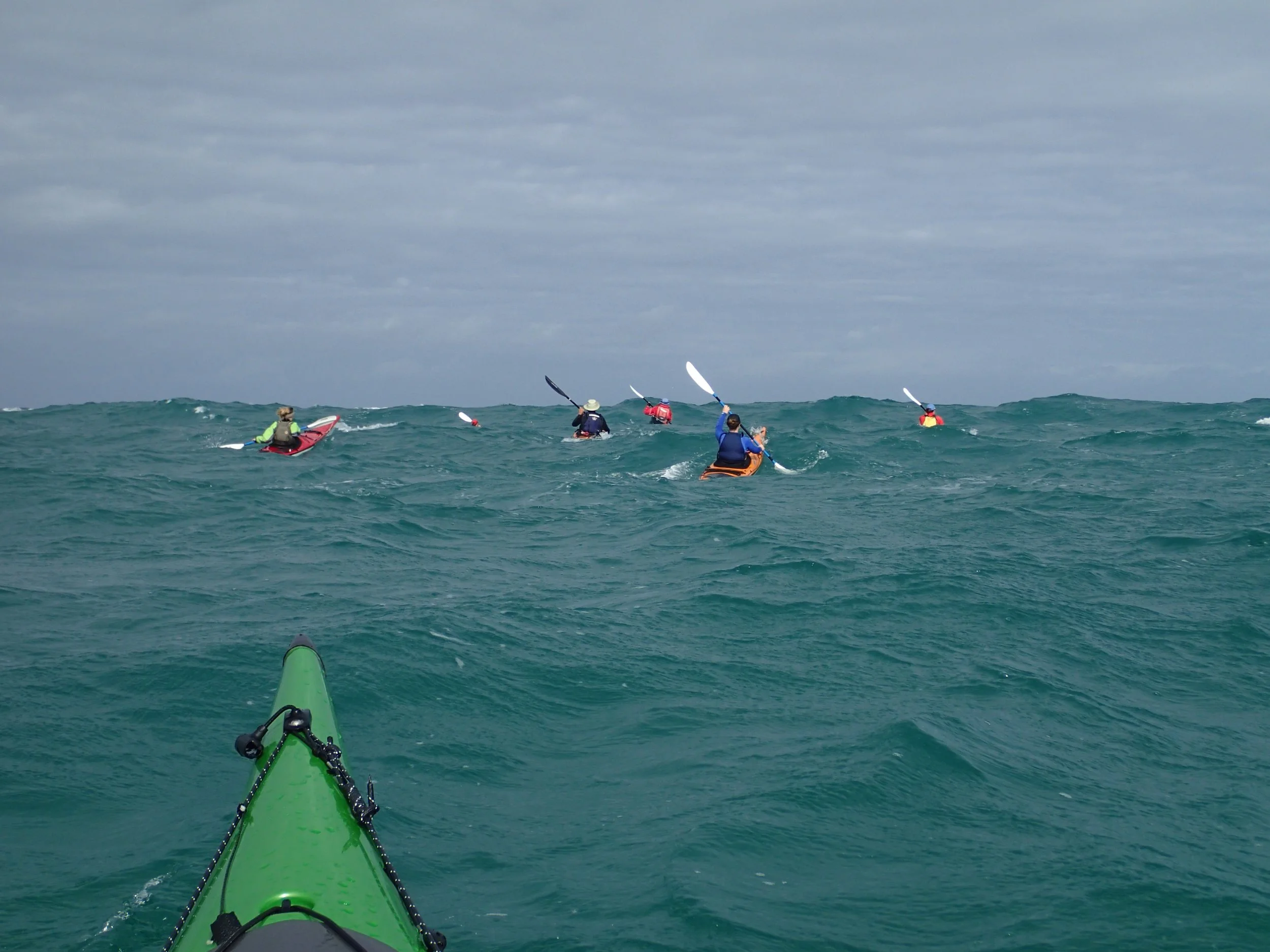
Having a year off uni to train with a women’s team of sea kayakers totally changed my career path and personal life.
Somehow, the outdoors became my career
Once you've been paddling between offshore islands with other women, it's hard to imagine making teaching within 4 walls your occupation. I knew that the classroom wasn't for me, so as soon as I graduated from university, I started researching what adventurous jobs I could find around the country.
I've guided bushwalks and kayak expeditions. I've taught surfing and stand-up paddleboarding. I've worked in snorkelling and shark cage diving. I've led young people through remote landscapes and supported adults trying outdoor activities for the first time. Then eventually (after losing my kayak guiding job to covid) I started my own outdoor business.
Enliven Outdoor Adventures.
Enliven began as a way to create outdoor experiences that felt different. I particularly loved working with women. I saw what happened when women were given a supportive environment to try something new without feeling stupid for asking questions, worrying about keeping up, or needing to prove they belonged there ( like I had had to in many of my outdoor roles). Women would arrive nervous, and then they'd stand up on the paddle board, catch the wave, walk the trail, sleep outside....do the thing they weren't entirely sure they could do.
I loved watching that transformation, but there was something I hadn't really questioned yet.
I was still the guide.
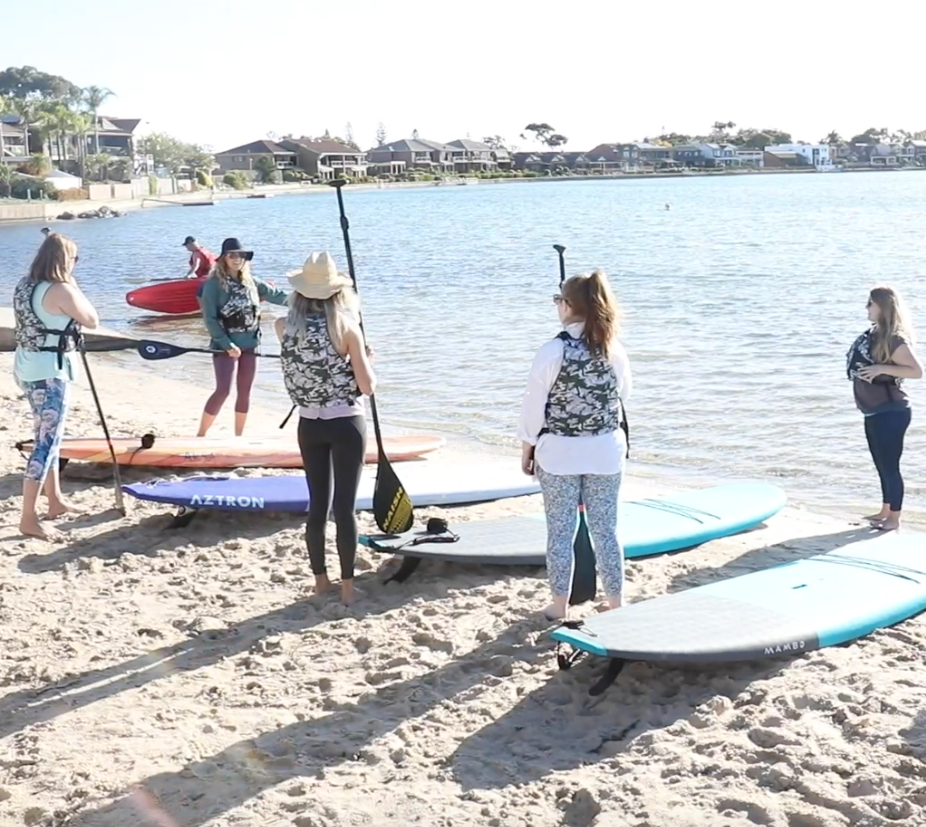
Early days for Enliven Outdoor Adventures; teaching a women’s SUP lesson in 2021.
Being guided and being self-led aren't the same thing
When you're on a guided adventure, someone else is carrying a huge amount of invisible responsibility. They've researched the route, checked the weather, thought about water, packed emergency equipment, created contingency plans, considered evacuation points, made decisions about when to continue and when to turn around and SO many more behind the scenes tasks. As the participant, you can simply follow.
There's absolutely still a place for that. I still LOVE guided experiences, but I started becoming increasingly interested in what happened after women left me. Did they actually feel capable of going outdoors without a guide? Could they choose a trail? Could they work out what gear they needed? Could they assess risk? Could they navigate? Could they make good decisions when something didn't go to plan? Ultimately, if I wanted to start my business to empower women, then making them reliant upon a guide was never going to achieve that. Could they become their own guide? Ironically, I was about to have that same question asked of me...
The 1,000km hike that changed things
In Winter 2025, I set out to walk Western Australia's 1,000km Bibbulmun Track.
I started the hike with my boyfriend at the time, who had considerably more long-distance hiking experience than I did. He'd walked the trail before. He knew the route and had done much of the pre-planning while I was busy working school camps. Despite having a decade of professional outdoor experience behind me, in many ways I was still able to go along for the ride. Then, approximately 350km into the trail, we broke up. Suddenly, I was alone. And I still had 650km to go. There was no guide. No experienced hiking partner whose plan I could follow. I instantly became responsible for my route planning, navigation, food, first aid, safety, emergency planning and every decision that came with travelling alone on the track.
I was also suddenly carrying equipment that had been intended for two people (including a two-person tent, four-person Trangia and our full first aid kit). It wasn't exactly the graceful transition into solo hiking I would recommend, but I kept walking. My original plan to walk 2/3 of the trail changed. I needed to finish the thing. So I removed myself from my next work commitments, changed my flights, and set out to finish the remaining 650kms solo. Kilometre after kilometre, a lot changed. I wasn't just learning that I could walk 1,000km, I was collecting evidence that I could take care of myself.

The half way point on my northbound through hike of the 1000km Bibbulmun Track
Confidence didn't come first
This is probably the biggest lesson I've taken from my own adventures and from years of working with women outdoors; you don't need to feel confident before you start. Confidence comes afterwards. You start with enough courage to try, then you learn, you practise, you make decisions, you occasionally get things wrong, you solve problems, and gradually you accumulate evidence that you know how to do this. That's confidence.
And it's why I've become far less interested in simply taking women on adventures and much more interested in teaching women the skills to create adventures of their own.
Connection. Craft. Confidence.
Today, everything we create at Enliven is built around three things.
Connection.
Because outdoor adventure is easier to step into when you're connected to the country your on, connected to yourself and your emotions, and surrounded by people who encourage your growth, share what they know and don't make you feel silly for asking the "dumb" questions.
Craft.
The practical skills. Choosing a trail. Understanding your gear. Planning your food. Navigating. Managing risk. Looking after your body. Knowing what to do when things change. I refuse to call these "hard skills". They're not hard. They're teachable skills.
And finally:
Confidence.
Not just the confidence someone gives you by saying, "You've got this!", the confidence you build by repeatedly proving to yourself that you can figure things out. Together, those three things create something I care deeply about:
capability.

A new era for Enliven Outdoor Adventures.
The next chapter of Enliven
Enliven still creates guided outdoor experiences.There is something incredibly special about bringing a group of women together somewhere beautiful and watching strangers become adventure buddies over a few days. But the bigger vision has evolved. I don't want women to need me every time they want an adventure. I want them to eventually say: "I reckon I could organise that myself."
That's why I created Hike Ready, our six-week online program teaching women how to plan and prepare for their own self-led multi-day hikes.
It's why our kindred day hikes combine beautiful experiences with practical outdoor education.
And it's why you'll see me sharing more of what I've learnt through years of guiding, teaching and occasionally learning things the hard way myself. Adventure shouldn't belong exclusively to the people who grew up doing it or who got the privilege of learning outdoor education at school. You don't need to be the fittest person, you don't need the most expensive gear, you don't need to have an adventurous partner, and you certainly don't need to wait until you magically feel confident enough. You can learn how to plan your own adventures now.
What I want Enliven women to become
Funnily enough, my new measure of success for enliven is to create capable clients who no longer need me to guide them on an experience. Women who can sit outside their tent at the end of the day knowing: I got myself here, I know how to look after myself, and I can do this again.
That's the kind of outdoor woman I want Enliven to help create. And, perhaps without realising it at the time, that's the woman I was becoming during those final 650 kilometres of the Bibbulmun too.